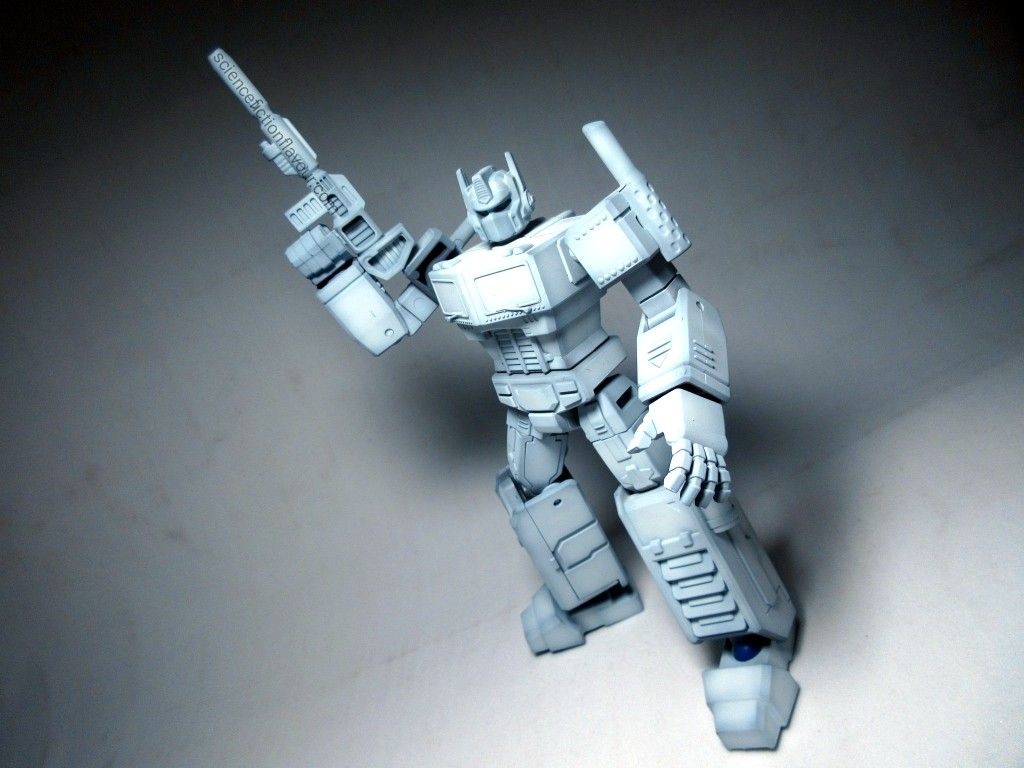
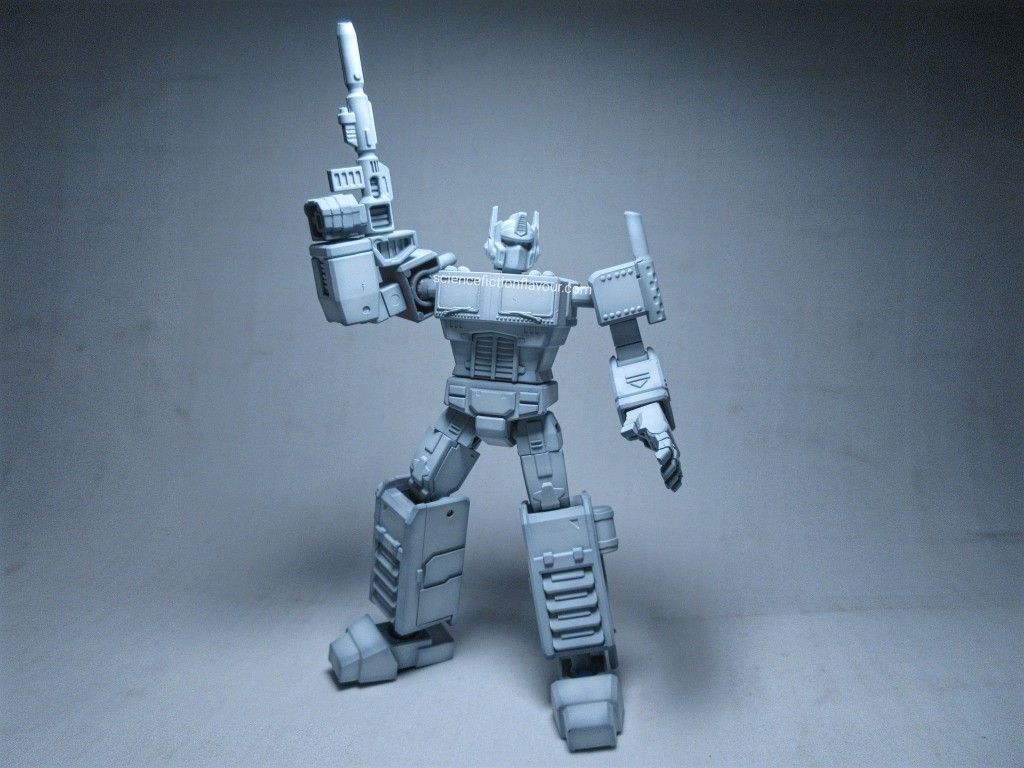
Inspired by the white colour scheme of Takara Tomy’s Convoy (Optimus Prime) speakers for iPod, I decided to paint and assemble my own interpretation using Yolopark’s 12 cm Optimus Prime model kit.
The entire model was airbrushed with a base coat of GSI Creos Mr. Color No. 13 Neutral Grey. After allowing the base coat to dry, I applied airbrush weathering using Mr. Color No. 107 Character White, creating a predominantly white finish while retaining some of the underlying grey for depth.
Once all the paint had fully dried, the parts were assembled to complete the model.
Finished on 5 October 2026 — fifteen years after the passing of Steve Jobs.
The white Convoy aesthetic feels particularly fitting here, recalling the distinctive white-and-metallic design language of the iPod era.
Border 1/12 BA-001 Tesla Trooper — Red Alert 30th Anniversary
With the Command & Conquer: Red Alert 30th anniversary community celebration beginning in October 2026, it seemed like the right time to finally complete a long-shelved project: Border’s BA-001 Tesla Trooper in 1/12 scale.
The kit was received as a gift several months ago. The parts had already been painted according to their moulded runner colours, but only the first few assembly steps had been completed before the model went back into its box.
The original paintwork was done using GSI Creos Mr. Hobby Mr. Color paints. Parts from the black runners received a uniform grey coat; the red runners received a black base coat followed by red weathering; the orange runner received a black base coat followed by orange weathering; and the silver runner was given a uniform silver finish.
Tamiya Panel Line Accent Color was then used throughout: Black on the grey, orange and silver parts, and Light Grey on the red parts.
The kit also includes rubber-moulded components, including the gloves, tubing, pouches and sling. These were left in their original rubber material rather than airbrushed. Light Grey Panel Line Accent was used on the black rubber parts, while Black was used on the orange rubber parts.
The head sculpt is also made from a rubbery material and came as a separate piece. It was left in its original finish and mounted onto the body, with the Tesla Trooper’s distinctive, Juggernaut-like headgear fitted over it.
Nitrile gloves proved useful during the final assembly and handling of these flexible components.
Once assembled, the different materials become much more apparent. The figure combines metallic-looking painted surfaces, rigid plastic components and flexible rubberised equipment, giving the Tesla Trooper a convincing multi-material appearance.
There is no particular faction preference behind the build. The appeal is the Tesla Trooper’s suit design as a piece of fictional science-fiction technology — an armoured infantry system built around an electrically powered weapon.
The actual 30th anniversary of Command & Conquer: Red Alert falls on 22 November 2026, but with the community celebration already beginning on 2 October, there was little reason to keep the unfinished Tesla Trooper in its box.
After months of waiting, the Tesla Trooper is finally assembled.
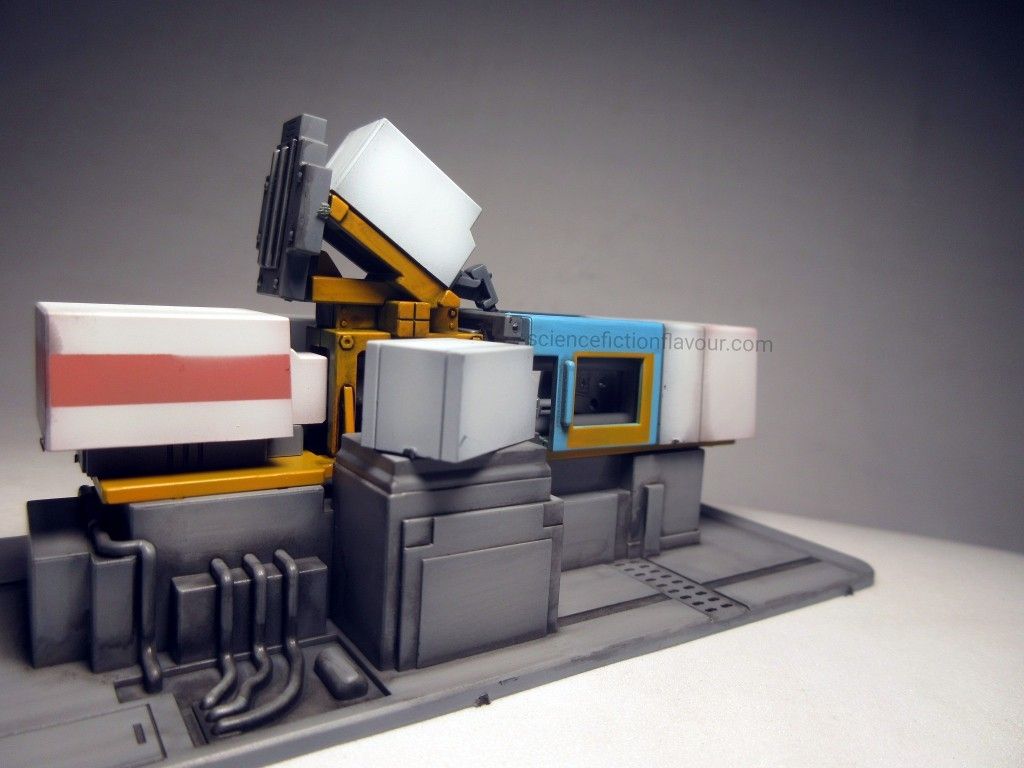
To mark Manufacturing Day 2026, a fitting subject was chosen: Bandai’s 1/60 Electromotive Style Injection Machine.
Rather than a Gundam or conventional mecha, this unusual hobby kit represents the industrial machinery used to manufacture plastic model kits.
From Black Plastic to Painted Machine
The kit consists of a single runner, with all parts moulded in black plastic. A silver “Ecopla” sticker is included on the box.
Initially, having the entire runner in one colour seemed likely to make the painting process more difficult. Without colour-separated plastic to provide guidance, the parts had to be studied individually and the colour allocation determined by observation.
This encouraged a more deliberate approach to the surfaces and finishing.
All parts first received an airbrushed base coat of Mr. Color No. 13 Neutral Grey.
Paint Allocation
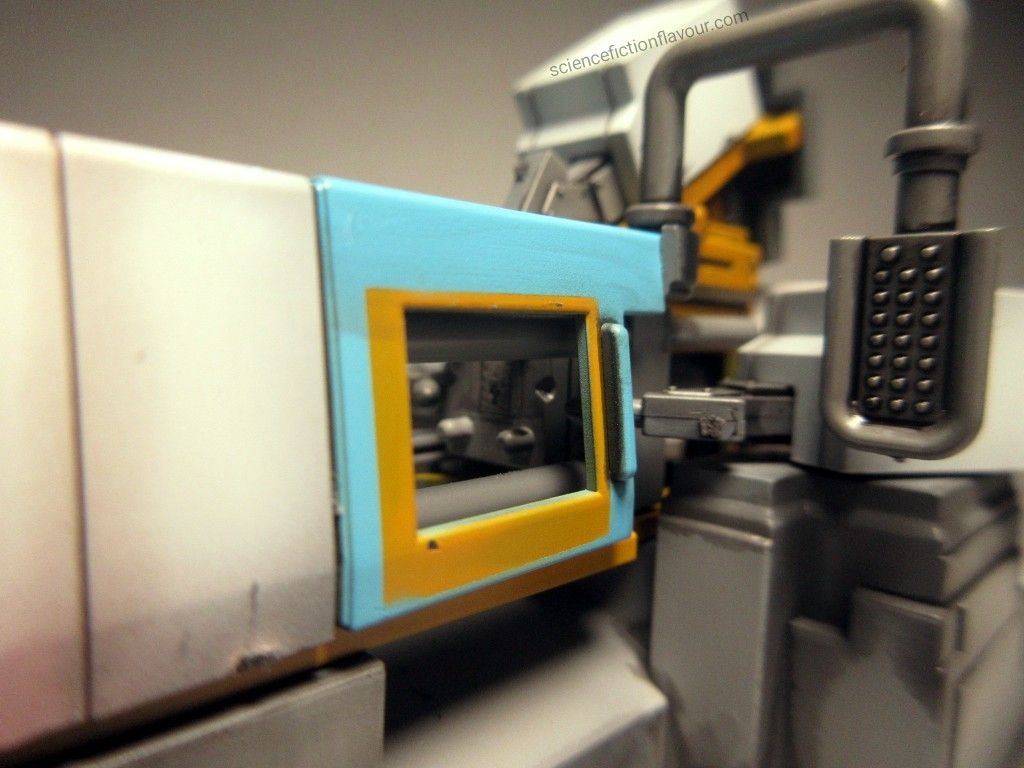
Parts 5 and 6 were base coated with Mr. Color No. 109 Character Yellow. The supplied stickers were repurposed as masking material to protect the areas intended to remain yellow before Mr. Color No. 323 Light Blue was airbrushed over the exposed sections. As the parts were thin, the Light Blue was applied as a uniform coat rather than heavily weathered.
The masking stickers were inadvertently switched between the two parts. Consequently, the yellow perimeter around the side-door window is thicker toward the lower section rather than the upper section. The result was left as it was.
Parts 14 and 15 also received Mr. Color No. 109 Character Yellow.
Part 19 was base coated with Mr. Hobby Gundam Color UG10 MS Char’s Pink. The pink area was masked before Mr. Color No. 107 Character White was applied to the exposed section.
Part 20 received a different treatment. Selected wall surfaces were first airbrushed with Mr. Hobby Gundam Color UG10 MS Char’s Pink, while others remained Mr. Color No. 13 Neutral Grey. Masking had initially been planned, but was abandoned in favour of weathering the entire part with Mr. Color No. 107 Character White. The White was airbrushed over the whole part, leaving pinkish and greyish tones visible around the outer rim of the weathered sections.
The remaining Neutral Grey areas were lightened with a mixture of Mr. Color No. 13 Neutral Grey and No. 107 Character White, adding tonal variation to the overall finish.
Panel Lining and Finishing
After airbrushing, Tamiya Panel Line Accent Color Black was applied to the moulded details. Excess was removed with cotton buds dampened with Tamiya X-20.
For the final assembly, the supplied stickers were deliberately left unused. This omits details such as the alphanumeric prefix, chamfered rectangular markings, and simulated vent lines.
The resulting minimalist finish keeps the focus on the machine’s forms, painted surfaces and restrained detailing.
A Machine Behind the Models
There is something appropriately circular about building a model of an injection-moulding machine.
Injection-moulding machine → plastic → model kit → modeler.
The machinery behind the hobby has itself become a model on the workbench.
For Manufacturing Day 2026, Bandai’s 1/60 Electromotive Style Injection Machine offers a different kind of model-building experience: one that turns attention towards the industrial process behind the hobby itself.
HGUC 1/144 Gundam GP01Fb “Zephyranthes” Full Burnern — LINKIN PARK: UNSHATTER Commemorative Build
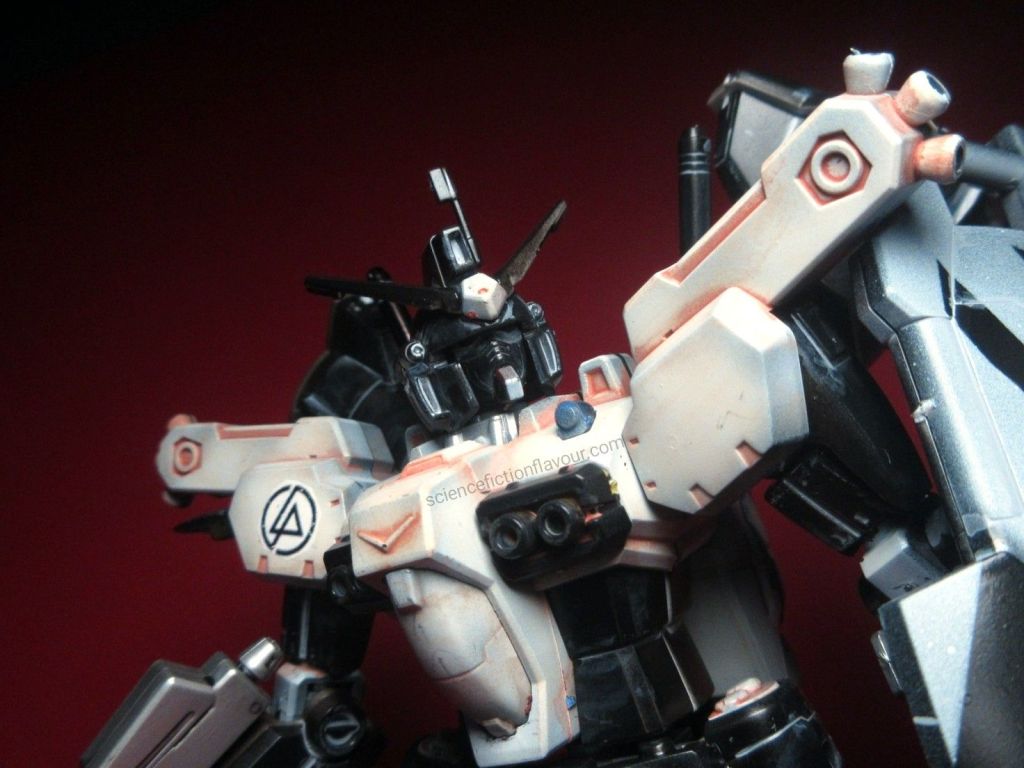
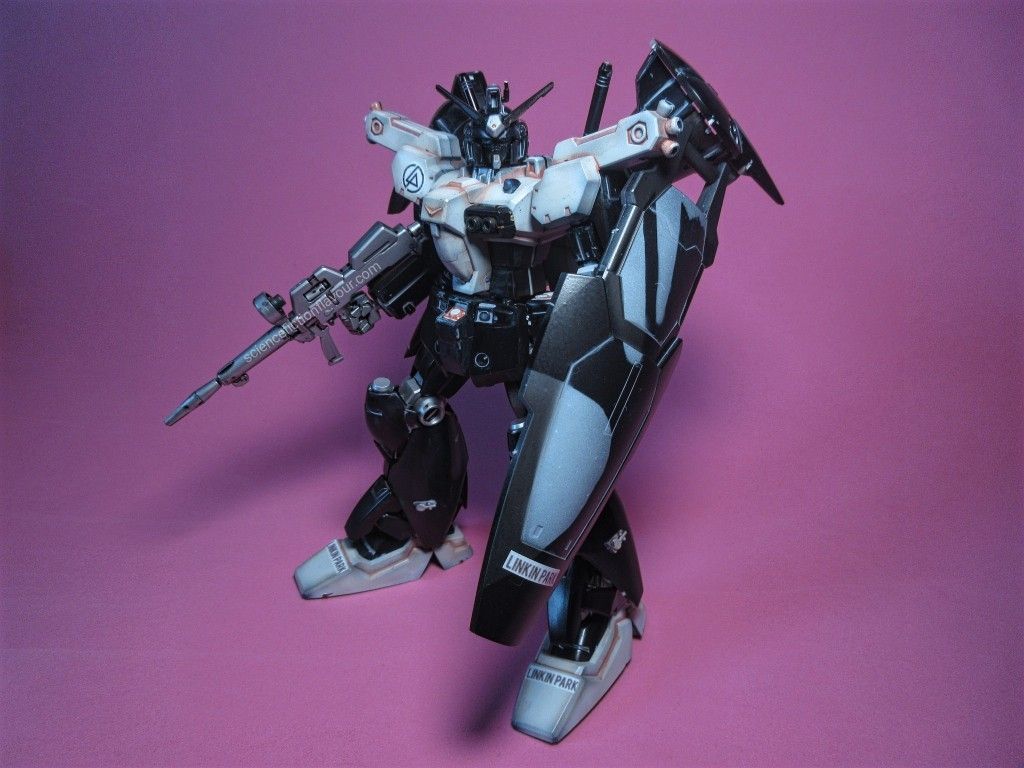
With LINKIN PARK: UNSHATTER releasing on 30 September 2026, I decided to commemorate the occasion with a Gunpla build.
For this build, I worked on the HGUC 1/144 Gundam GP01Fb “Zephyranthes” Full Burnern, a Gunpla with an existing Linkin Park connection.
Painting
I started by airbrushing the parts while they were still on the runners with Mr. Hobby Mr. Color No. 2 Gloss Black.
Parts requiring bright colours received Mr. Color No. 107 Character White, while the grey parts were painted with Mr. Color No. 8 Silver. Parts intended to remain dark retained the Gloss Black.
I deliberately left the pre-2000 polycap runners unpainted. Their rubbery-like material made me concerned that paint might not adhere properly, potentially flaking off and causing problems with the joints.
Panel Lining
I used different Tamiya Panel Line Accent colours according to the base colour:
Character White — Pink-Brown
Gloss Black — Light Grey
Silver — Black
After allowing the panel liner to dry, I cleaned up the excess with cotton buds dipped in Tamiya X-20 Enamel Thinner.
Assembly and Decals
Assembly was straightforward.
Once the main assembly was completed, I applied the waterslide decals. The round Linkin Park logo was particularly important to the build, but I noticed that its ink had a tendency to crack or flake.
To protect the decal and the paintwork, I sprayed the completed model with Mr. Hobby Top Coat Semi-Gloss.
I would have preferred to retain the full Gloss Black shine, but protecting the decal was more important. The semi-gloss finish was a worthwhile trade-off.
Custom Shield
The shield was inspired by the silhouette artwork from A Thousand Suns.
I first masked and airbrushed the silhouette in Mr. Color No. 107 Character White, creating one continuous shape. Once the masking was removed, the complete album-art silhouette could be seen as one shape.
I then applied Tamiya Light Grey Panel Line Accent to the shield and cleaned the excess with X-20 Enamel Thinner.
The shield was deliberately the last piece cut from the runner. Once it was cut out, I test-fitted it onto the completed Gunpla.
However, this was not yet the final installation. I removed the shield again for a second masking stage.
For this stage, I used the original paper stickers supplied for the shield as masking material. The stickers covered the silhouette while leaving the outer rim/perimeter exposed.
I diluted Mr. Color No. 2 Gloss Black and airbrushed it over the exposed perimeter. After allowing the paint to dry, I carefully removed the stickers.
The result was the A Thousand Suns silhouette segmented into two sections, with the shield’s outer perimeter creating the separation.
The completed shield was then attached to the GP01Fb.
Final
This build brought together airbrushing on the runners, colour-specific panel lining, custom masking, waterslide decals and protective top coating.
The Linkin Park logo and the custom A Thousand Suns shield design give this GP01Fb its particular connection to the occasion.
I would have preferred to preserve the full Gloss Black shine, but protecting the decal and the completed model mattered more.
This was my personal Gunpla build to mark the release of LINKIN PARK: UNSHATTER.
HG 1/144 Mobile BuCue — SEED × DUNE: A What-Should-Have-Been
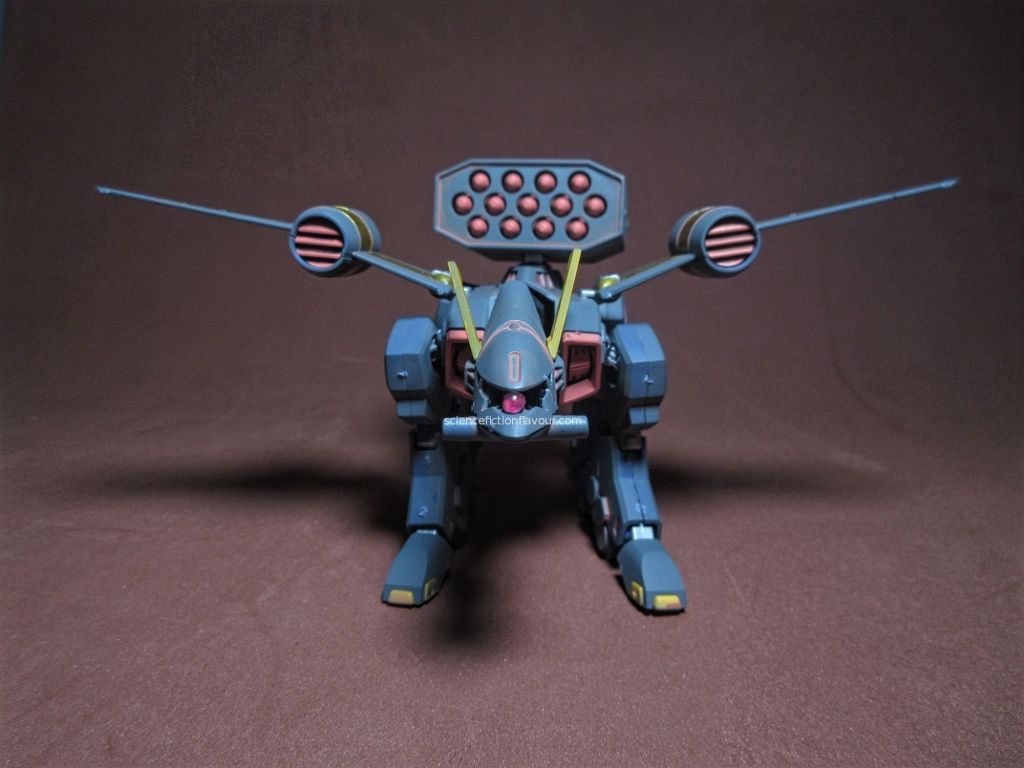
I have been working on Bandai’s 1/144 HG Mobile BuCue over the past few days, and what started as another modelmaking project gradually became something more personal.
The BuCue is one of the more distinctive machines from Mobile Suit Gundam SEED: a four-legged, low-slung ground-combat Mobile Suit that looks less like a conventional humanoid robot and more like an armoured mechanical hound. Its desert-combat character made it particularly appropriate for an idea that had been sitting in my mind since 2024.
I began the build in my usual way, soaking the runners in soapy water before using a toothbrush to rinse away the residue. After leaving the runners and parts to dry, I airbrushed the solid-coloured moulded parts with Mr Hobby Mr Colour No. 13 Neutral Grey.
The red moulded parts were subsequently airbrushed with Gundam Colour UG10 MS Char Pink, over the Neutral Grey base. The yellow parts received Mr Colour No. 109 Character Yellow, also over the grey base. For the joint components, I used Mr Colour No. 8 Silver over the Neutral Grey, giving the mechanical areas a more metallic appearance.
Once the paint had dried, I moved on to panel lining. The Neutral Grey surfaces received Tamiya Panel Line Accent Colour Pink-Brown, while the MS Char Pink areas and silver mechanical components received Tamiya Panel Line Accent Colour Black. After allowing the panel liner to dry, I removed the excess with cotton buds moistened with Tamiya X-20 Enamel Thinner.
Then came assembly—and this was where the build started becoming distinctly my own.
Some of the BuCue’s components have an aircraft-wing-like appearance, accompanied by engine-like compartments and sticker details. Instead of using the supplied stickers, I decided to highlight those areas with a gold permanent marker.
While working on those parts, I also decided to inscribe the words “SEED” and “DUNE” onto the wings, taking inspiration from the typography of the Dune film logo.
Why?
Back in 2024, Gundam SEED Freedom and Dune: Part Two were promoted together in a special cinema collaboration. The official crossover artwork placed the SEED Freedom protagonists at the centre of the visual. My personal feeling was that a desert-themed SEED × Dune collaboration could have taken a different direction.
Instead of focusing on the characters of SEED Freedom, I imagined the machines and characters associated with the desert operations of the original Gundam SEED taking centre stage.
Hence the BuCue.
This build is my little tribute to a “what should have been.”
I wanted to take an actual desert-combat Mobile Suit from Gundam SEED and reinterpret it through the visual language of Dune. The BuCue seemed almost tailor-made for that idea: a quadrupedal machine charging across a desert landscape, looking more like some enormous mechanical hunting beast than a conventional Mobile Suit.
I also decided not to use the supplied sticker for the BuCue’s monoeye camera.
Instead, I cut a small piece from the leftover clear-pink plastic runner, shaped it and glued it onto the head as a physical optical element. The recessed area surrounding the camera was then shaded with a fine-tip black marker. The dark surround creates contrast against the translucent pink piece, allowing the monoeye to read more like an actual recessed sensor rather than a flat sticker.
Toward the end of assembly came another choice. The kit provides the option of equipping the BuCue with either a twin-cannon turret or a multi-rocket launcher battery.
Naturally, I tried both.
I also tried the BuCue’s famous dual beam sabers once.
With the two sabers mounted in front, the BuCue looks like a mechanical hound biting down on a double-edged sword and charging straight at its opponent.
But after giving the configuration a try, I set it aside.
My favourite is the rocket launcher.
The rocket battery reinforces the BuCue’s identity as a desert assault machine. Low, wide and four-legged, it looks like something built specifically to race across hostile terrain while delivering a considerable amount of firepower.
Which brings me back to the two words on its wings:
SEED. DUNE.
This isn’t an attempt to recreate an official Bandai or film collaboration. It is my own interpretation of one—a small-scale model that combines a machine from Gundam SEED with the visual language and atmosphere of Dune.
And I deliberately wanted to finish it today, 22 September 2026.
Today marks the release of Dune: Awakening on PlayStation 5 and Xbox Series X|S, bringing Funcom’s journey across Arrakis to console players.
So there was something fitting about finishing a desert-themed BuCue on the same day.
A machine from one fictional desert battlefield, reworked through my own SEED × DUNE interpretation, now marks the arrival of another journey across the sands of Arrakis.
A little experiment in paint, markers, plastic and imagination.
A little piece of “what should have been.”
And, appropriately enough, it is finally complete on a day when we return to the desert.
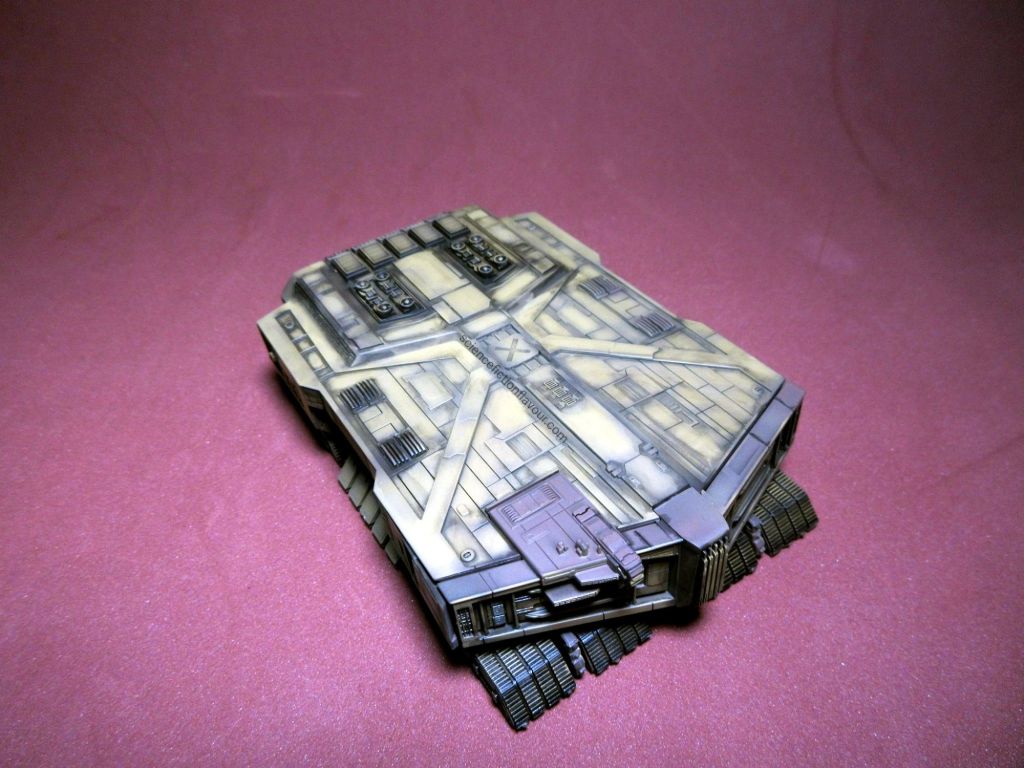
Today marks the console release of Dune: Awakening on PlayStation 5 and Xbox Series X|S. To commemorate the occasion, I decided to finish a model that has been sitting on my workbench for the past few days: the MENG Dune Spice Harvester.
The Spice Harvester is one of the most recognisable pieces of machinery in the Dune universe. Unlike a sleek spacecraft or a humanoid mecha, it is essentially a gigantic industrial machine designed to operate in one of the harshest environments imaginable.
That industrial character was what attracted me to the kit.
Preparing the Parts
I began by soaking the runners in soapy water. After that, I rinsed them thoroughly and used a toothbrush to remove any remaining soap and residue.
Once the runners had dried completely, I was ready to start painting.
One thing I like about my workflow is painting parts while they are still attached to the runners whenever practical. It gives me something to hold while airbrushing and allows me to establish the overall colour before assembly.
Painting
For the base coat, I used Mr Hobby Mr Color No. 22 Dark Earth.
I wanted the Harvester to have a darker, weathered industrial appearance rather than looking like a clean, newly manufactured machine. After the base coat had dried, I followed up with Mr Color No. 21 Middle Stone for the weathering.
The combination worked quite nicely for the subject. The Dark Earth provided the underlying industrial colour, while the Middle Stone helped give the machine that dusty, sandy appearance associated with Arrakis.
Once the paint had dried, I applied Tamiya Panel Line Accent Color Black to the recesses.
After allowing the panel liner to dry, I dipped a cotton bud into Tamiya Color Enamel Paint X-20 Thinner and used it to remove the excess panel line wash from the exposed surfaces.
The result was a more defined mechanical appearance without covering the entire model in black.
Assembly
With the painted parts ready, I moved on to assembly.
For the most part, construction was quite straightforward. The main areas that required a little more patience were the four legs supporting the continuous tracks.
The legs occasionally came loose while I was working on the model, meaning I had to repeatedly tighten and reposition them. It wasn’t particularly complicated, but it was one of those small modelling frustrations that can slow down an otherwise straightforward build.
The continuous tracks were another matter.
There are 16 sets of track subassemblies to construct, so this part of the build required perseverance more than anything else. There is something rather satisfying about seeing all those individual assemblies eventually come together, but getting through them does require some patience.
Once the track assemblies were completed, the side plates were comparatively simple to put together.
And gradually, the Harvester started to look like an actual machine.
The Finished Harvester
After the final pieces were assembled, I had a small but surprisingly characterful representation of the Spice Harvester.
The painting and weathering were particularly important to me. I didn’t want it to look like a pristine factory-new machine. The Dark Earth and Middle Stone combination, together with the black panel lining, gives the model a much more used and dusty appearance.
That seems appropriate for a machine whose entire purpose is to operate on Arrakis.
There is also something interesting about building a model like this compared with building a Gundam or another conventional sci-fi vehicle. The Harvester doesn’t really feel like a conventional “vehicle”. It feels like a piece of industrial equipment — a mobile factory designed to crawl across the desert and extract spice.
That industrial quality is probably what makes the finished model so visually distinctive.
Why Build It Now?
The timing is intentional.
Today, 22 September 2026, Dune: Awakening arrives on PlayStation 5 and Xbox Series X|S.
Rather than simply marking the game’s release by playing it, I thought it would be more meaningful to commemorate the occasion through something I could physically build.
So while players are beginning their journeys across Arrakis in the game, I have my own little piece of Arrakis sitting on my workbench.
A Spice Harvester.
Built, painted and weathered by hand.
And perhaps that’s one of the things I enjoy most about modelmaking: taking something from a fictional world and turning it into a physical object that I can actually hold, build and photograph.
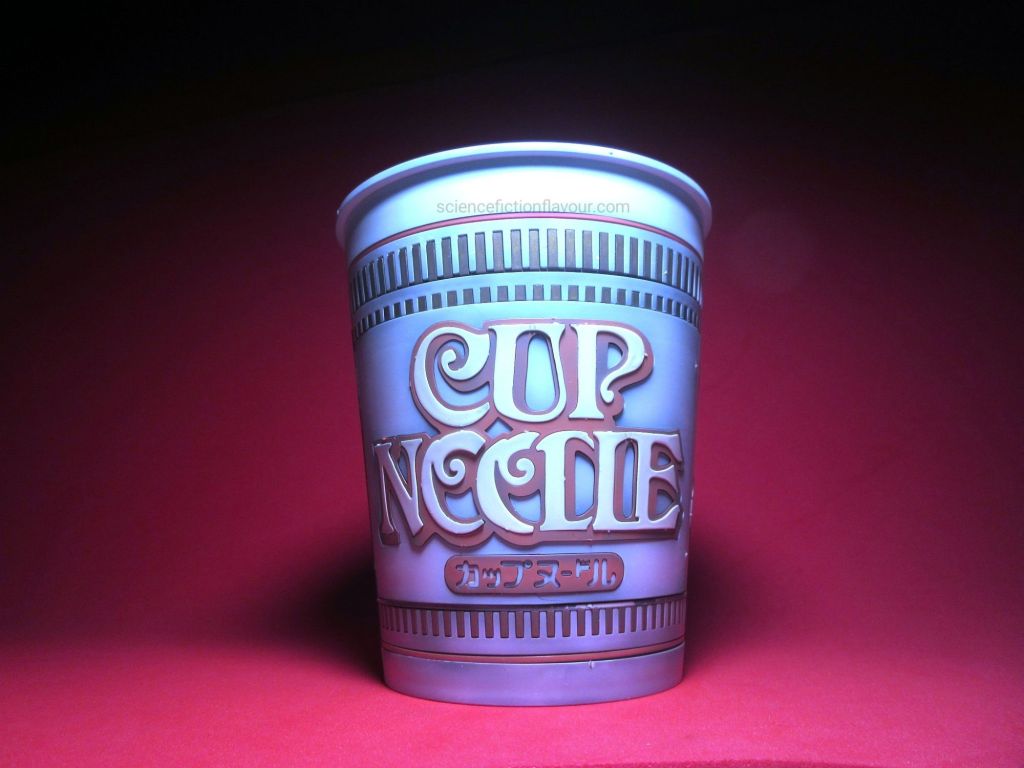
Kit: Best Hit Chronicle 1/1 Cup Noodle Manufacturer: Bandai Scale: 1/1 Completed: 18 September 2026
18 September 1971.
According to the instruction manual for Bandai’s Best Hit Chronicle 1/1 Cup Noodle, this was the date when CUP NOODLE was created as the world’s first cup ramen.
So there was something particularly appropriate about completing this kit on 18 September 2026 — exactly 55 years later.
At first glance, a 1/1-scale plastic model of a Cup Noodle might seem like a rather unusual modelling subject. After all, this is an everyday object that we see in convenience stores and supermarkets and probably don’t give much thought to once we have finished eating it.
Building the kit, however, made me look at that familiar object quite differently.
Painting the parts
I started by airbrushing the parts while they were still attached to their runners, using Mr Hobby Mr Color No. 13 Neutral Grey as the base coat.
I then applied different colours to the moulded parts:
White moulded parts: Mr Color No. 107 Character White
Red moulded parts: Gundam Color UG10 MS Char Pink
Gold moulded parts: Mr Color No. 9 Gold
Simulated noodles: Mr Color No. 109 Character Yellow
The noodle pieces received some experimentation of their own.
I tried Tamiya Panel Line Accent Color Pink-Brown on a sample section of the noodles. The panel wash settled into the texture of the noodle strands and produced a noticeably deeper, warmer appearance. Viewed on its own, it reminded me somewhat of the appearance of noodles in a bowl of laksa.
Since this kit represents Cup Noodle generally rather than a specific flavour variant — such as Curry, Laksa, Chicken or Seafood — I initially decided not to apply the same treatment to the remaining larger noodle pieces.
Interestingly, once the noodles were assembled into the Dense Noodle Cluster, the effect became much less prominent. The individual strands visually blend together, and the variation contributes more to the texture and depth of the noodle mass than to any particular flavour association.
The engineering behind the familiar graphics
Assembly itself was straightforward.
What I found much more interesting was discovering how Bandai reproduced something that we normally take completely for granted: the printed graphics on a Cup Noodle container.
On the real product, we see the artwork and coloured patterns as a continuous printed surface. On this model, however, many of those visual elements are represented by individual coloured-plastic-moulded parts.
The result is an extremely clean separation between colours.
The upper and lower sections are especially interesting. Several ring-like, almost hula-hoop-like subassemblies come together to form the overall printed pattern of the cup.
Once assembled, the eye sees the familiar Cup Noodle design. But looking closely at the model reveals the construction underneath that visual illusion.
It made me appreciate just how much engineering goes into reproducing something that otherwise looks like a simple printed cup.
Bringing the recessed lettering to life
The kit does come with sticker decals, but one particular area made me reconsider whether I wanted to use them.
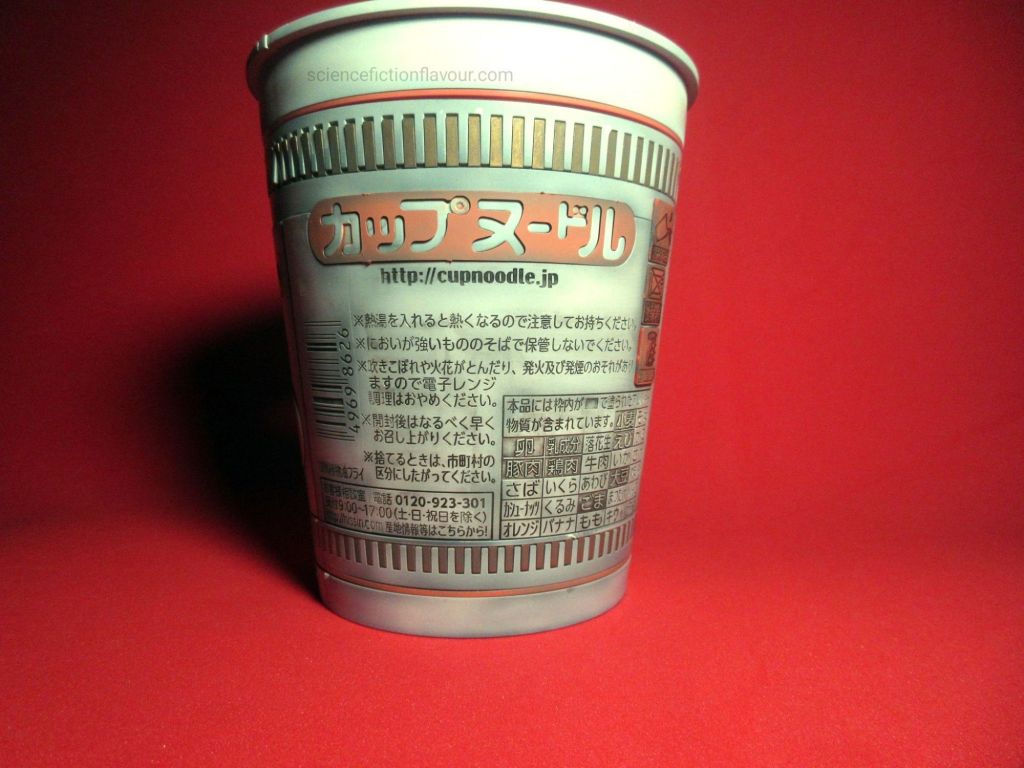
Part B(1) contains the nutritional information and paragraphs of Japanese text. These details are already represented as recesses in the plastic surface.
Since the lettering was already moulded into the plastic, I decided that applying the supplied sticker would obscure rather than enhance the detail.
Instead, I applied Tamiya Panel Line Accent Color Black, allowed it to settle into the recessed lettering, and then removed the excess from the surrounding surface using X-20 Thinner and a cotton bud.
The result was much more satisfying to me.
The black remained in the recessed areas, bringing the tiny Japanese text and nutritional information into view. What had initially appeared to be barely noticeable moulded detail became much more visible.
It felt less like applying a representation of the printing and more like revealing the detail that was already physically present in the model.
Choosing not to use the lid stickers
I made the same decision with the supplied Lid Sticker and Lid Stopper Sticker.
I ultimately left both off.
This wasn’t because the decals were poorly conceived. Rather, by this point in the build I had become increasingly interested in the physical construction of the kit itself.
The more I looked at the model, the more I wanted its moulded engineering, colour-separated components and recessed details to remain visible.
For me, that became part of what made this particular build interesting.
More than a plastic Cup Noodle
This kit also made me think about the difference between the price of an everyday product and the value of the engineering behind it.
A Cup Noodle is, ultimately, an inexpensive food product. We buy it, prepare it, eat it and throw away the container.
The Best Hit Chronicle kit takes that familiar disposable object and turns it into something that we examine, assemble and preserve.
And in doing so, it exposes some of the engineering that is normally hidden from us.
The real Cup Noodle’s graphics appear to be simply printed onto the cup. The model reveals that those visual elements can be broken down into multiple physical components and carefully assembled to recreate the appearance.
The recessed lettering on B(1) is another example. On the real product, it is simply part of the printed packaging. On the model, the lettering exists as physical geometry in the plastic.
The real Cup Noodle hides its construction behind its familiar appearance. The model kit makes some of that construction visible.
That is probably what I appreciated most about building it.
Rather than simply reproducing the appearance of a Cup Noodle, Bandai has created a 1/1-scale model that lets the builder examine how that appearance can itself be constructed.
55 years later
Completing the model on 18 September 2026, 55 years after the date given in the instruction manual for the creation of Cup Noodle, gives the build an additional significance.
It is still a playful subject — after all, it is a plastic model of a cup of noodles.
But it is also a small examination of an everyday object that has become deeply familiar.
The finished model now sits as a permanent, plastic representation of something that was originally designed to be consumed and discarded.
And perhaps that is the charm of the Best Hit Chronicle series.
It encourages us to look again at objects that are so familiar that we normally stop noticing them.
For this Cup Noodle, that meant looking past the printed graphics, past the noodles and even past the food itself — and appreciating the design, moulding and engineering that make the familiar object possible.
18 September 1971 → 18 September 2026.
55 years of Cup Noodle, commemorated in 1/1 scale.
This model was completed on 17 September 2026 to mark the 40th anniversary screening of The Transformers: The Movie, originally released in 1986.
After unpacking the box, I gave all the parts on the runners a base coat of Mr Hobby Mr Color No. 13 Neutral Grey.
I then worked on the moulded plastic parts according to their original colours:
Red moulded parts: Weathered with Mr Hobby Gundam Colour UG10 MS Char’s Pink.
Blue moulded parts: Given a flat coat using Mr Hobby Gundam Colour UG02. No weathering was applied.
Yellow moulded parts: Weathered with Mr Hobby Mr Color No. 109 Character Yellow.
The parts that came pre-painted in the package, namely the gold and silver parts, were left untouched.
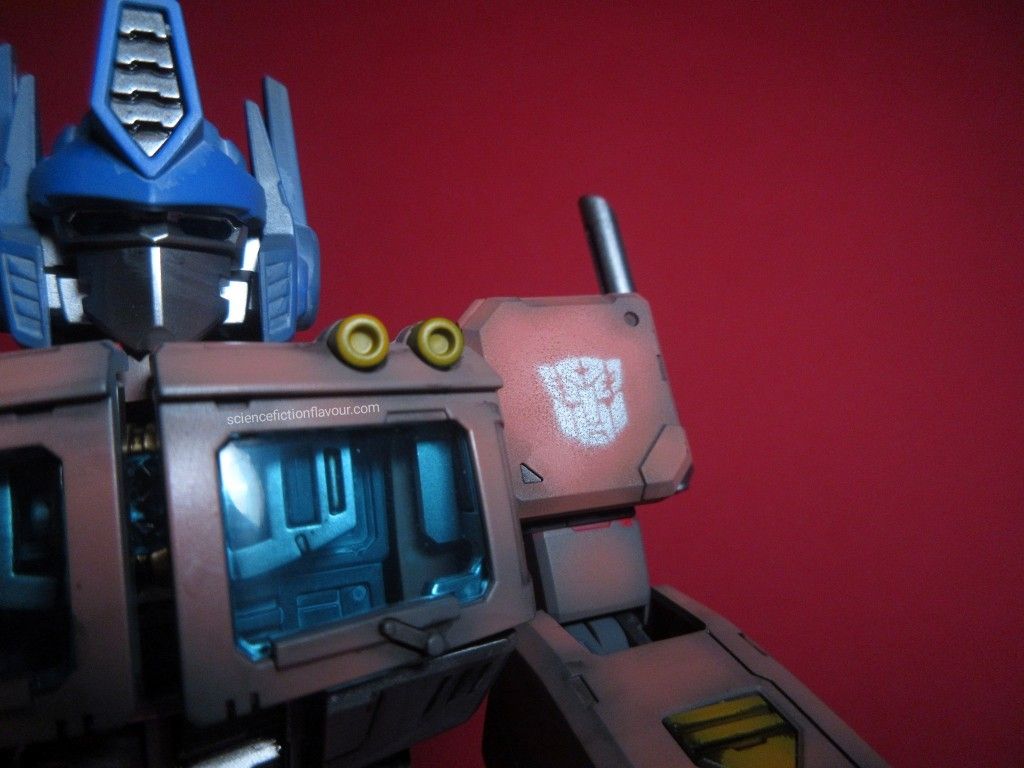
For the robot’s left shoulder, I used an ALEXEN MODELS Autobot logo stencil to achieve the desired shape. The Autobot logo was painted using Mr Hobby Mr Color No. 8 Silver.
Once the paint had dried, I applied Tamiya Panel Line Accent Color:
Black on the UG10-painted parts and the pre-painted gold and silver parts.
Light Grey on the UG02-painted parts.
Assembly
Assembly was generally straightforward. The main drawback was that some of the parts from runners H1 and H2 could be extremely tight when joining together. In some cases, they were too tight to assemble comfortably by hand.
The tight fit may have been partly due to the additional layer of base-coat paint on the parts. To get some of the pieces fully seated, I used a vice clamp to apply controlled pressure and tighten the joints. Care was taken to avoid damaging the parts.
Lighting Feature
After completing the assembly, I tested the magnet supplied with the kit. Passing the magnet over the designated area activates the lights inside the chest compartment, causing both Optimus Prime’s eyes and chest crystal to illuminate for a few seconds.
The model was completed on 17 September 2026, serving as my personal model-building commemoration of the 40th anniversary screening of The Transformers: The Movie.
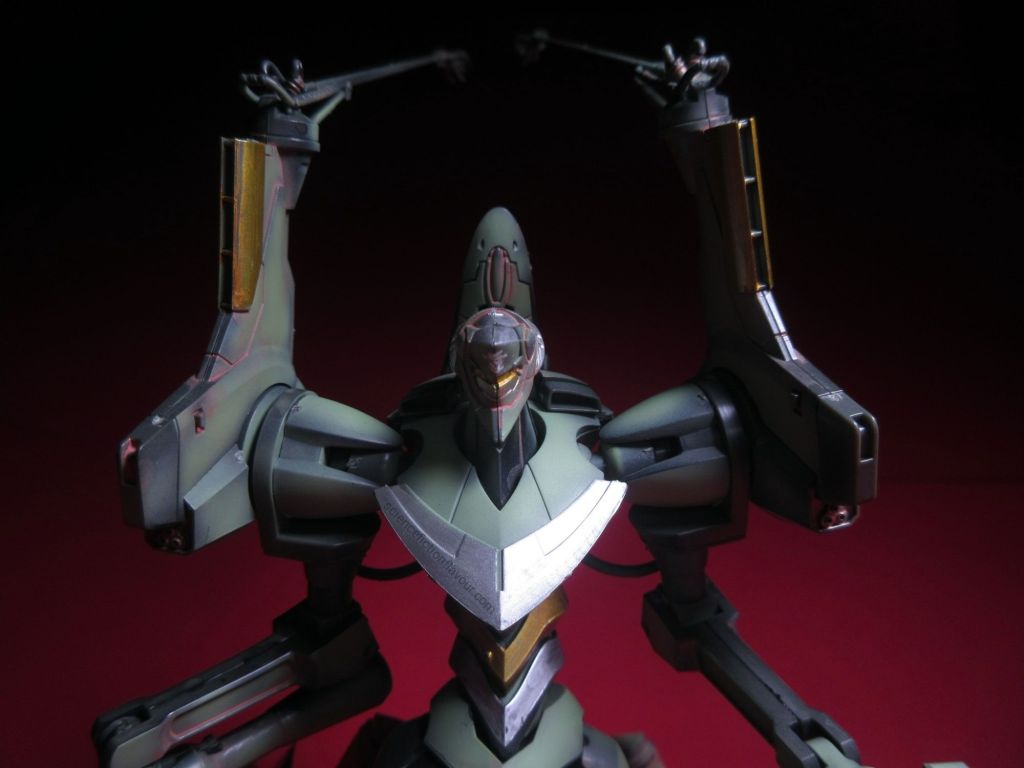
Building Kaiyodo Artpla Evangelion Provisional Unit-05 — 20 Years Since Rebuild Was Announced
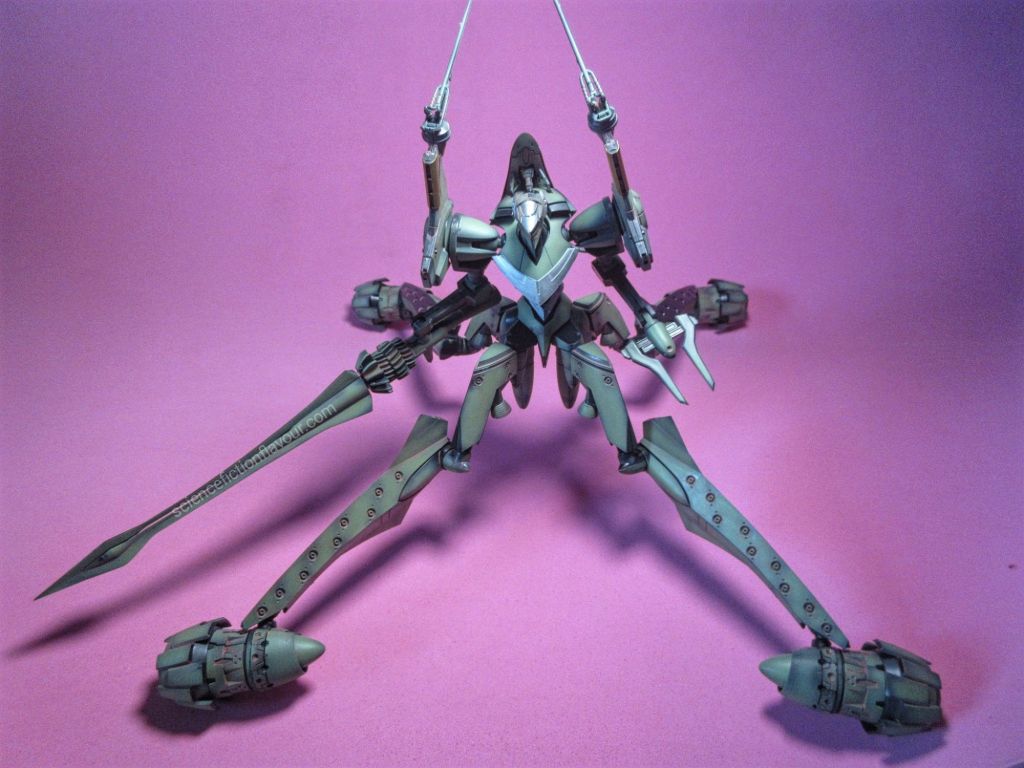
On 9 September 2026, the Kaiyodo Artpla Evangelion Provisional Unit-05 was completed.
The date marked 20 years since the October 2006 issue of Newtype went on sale in Japan, the issue associated with the announcement of what would become Rebuild of Evangelion. KADOKAWA’s WebNewtype archive records the issue’s release date as 9 September 2006.
Two decades later, the occasion was commemorated through the construction of one of the more unusual machines from the Rebuild series: EVA-05.
Preparing the Parts
The build began with the runners and parts being soaked in warm soapy water, followed by a rinse with a toothbrush. Once dry, the parts received a base coat of Mr. Hobby Mr. Color Gloss Black while still on the runners.
For weathering, Mr. Hobby Mr. Color No. 303 was initially tried, but proved too dark. No. 605 was subsequently used instead.
Tamiya Panel Line Accent Color Pink-Brown was applied into the recessed details, with the excess cleaned away afterwards. Selected mechanical details were highlighted with gold and silver permanent markers, followed by the application of waterslide decals.
Then came the more demanding part: assembly.
An Exercise in Patience
EVA-05 has a relatively compact torso, but its four-legged construction makes the build considerably more involved.
Step 32 was particularly tedious, requiring numerous small components to be assembled into what initially looked almost like an aircraft engine. These components were actually the feet of EVA-05’s insectoid body, with the same intricate construction repeated for all four legs.
Tamiya Cement was also required at various stages, adding considerably to the amount of careful assembly involved.
The build had become an exercise in patience.
The completed model also proved considerably larger in footprint than expected. While the torso is relatively slim, the four legs spread outward and give EVA-05 a surprisingly large presence on the display surface.
An Overlooked Detail
During leg assembly, an overlooked detail became apparent: some of the thigh parts had been weathered on only one side.
While still on the runners, it was easy to assume that the other surfaces were connection points or hidden areas. Once assembled, however, some of those surfaces were found to be visible.
Dismantling four painstakingly assembled legs was not considered worthwhile at that stage.
Instead, Pink-Brown Tamiya Panel Line Accent was applied to the recessed “leopard spot” details on the glossy black surfaces, with the excess removed afterwards.
The result is not perfectly symmetrical, but the darker surfaces can still read as deeper mechanical areas of the machine. More importantly, the assembly remained intact.
A Sculpture Rather Than a Poseable Machine
One of the appealing aspects of this Artpla kit is that it does not demand constant attention to posing.
The completed EVA-05 is largely a fixed-position sculpture. There are some possibilities for adjustment, particularly around the elbows and its spear and pincer-like equipment, but changing the overall configuration would require unplugging parts and experimenting with different combinations.
After such an intricate standard assembly, leaving the model in its intended configuration feels entirely appropriate.
The unusual four-legged silhouette is already the main attraction.
Twenty Years Later
Looking at the completed EVA-05, the build makes an appropriate marker for the anniversary.
Twenty years ago, Newtype carried news of a new Evangelion theatrical project. Two decades later, that moment has been commemorated through the physical process of building something connected to the resulting era.
There were small parts, cementing, weathering, decals, repeated assemblies and an overlooked detail along the way.
But that is part of the experience.
The finished model is more than a collection of painted plastic parts. It is a physical marker of a particular moment in anime history—and of the patience required to bring an unusual Evangelion design from a collection of runners to a finished sculpture.